

Creating a Bengal that is even more beautiful than the Asian Leopard Cat.
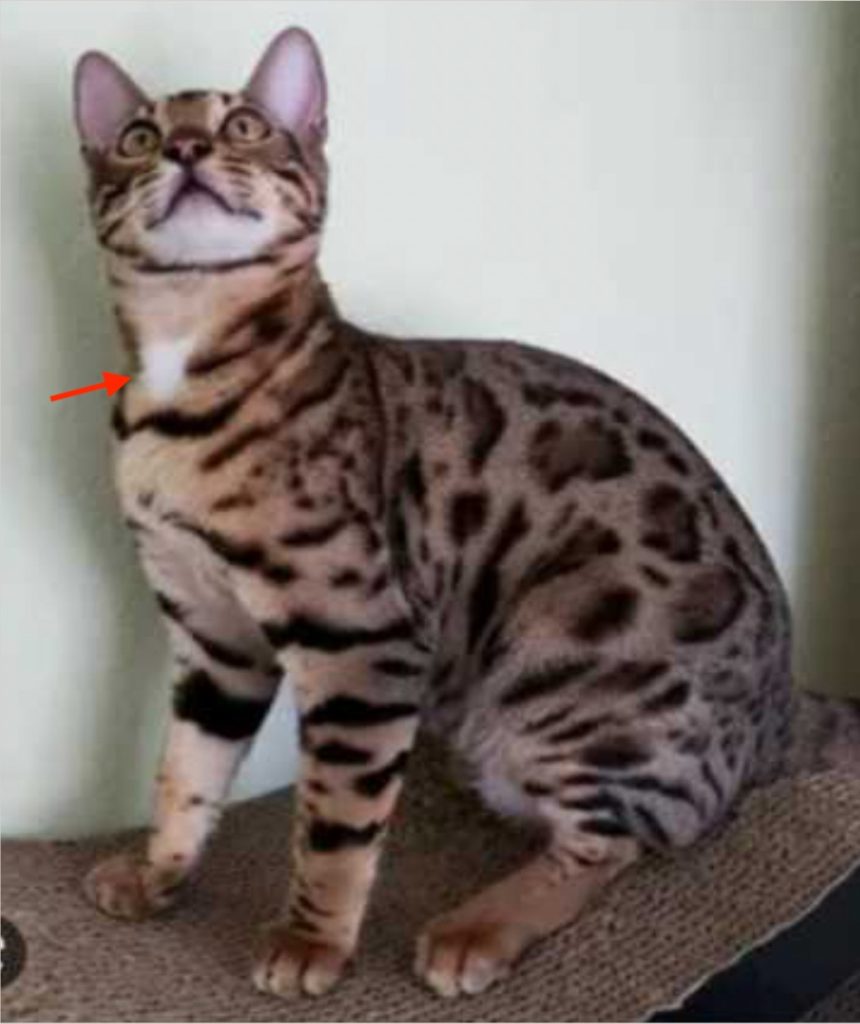
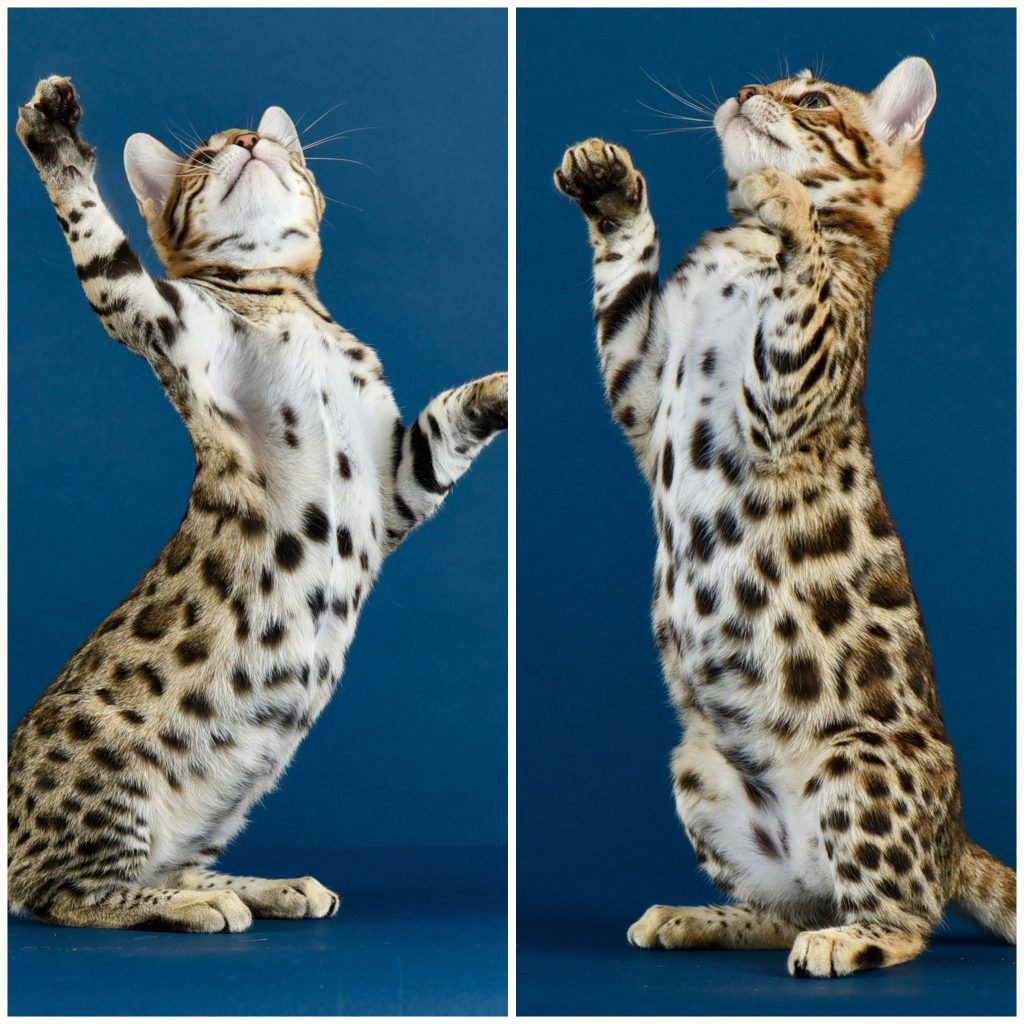
Countershading is one of the most “wild” traits a Bengal can show, not because it’s white, but because it stays patterned underneath.
In our program, we’ve learned the hard way that it’s a balancing act with contrast, maturity, and genetics.
This article is a case study of what we’ve tried since 2019, what worked, and what still isn’t fully locked.
A trait that stayed with me
When I got my first Bengal as a pet in Barcelona, the breeder mentioned something that I did not fully understand at the time. She spoke about the Asian Leopard Cat and how its underside was lighter, yet still patterned. She had one cat in her program that showed it clearly. She was not building her breeding around that feature, but she pointed it out as something that reflected the wild ancestor. That image stayed with me.
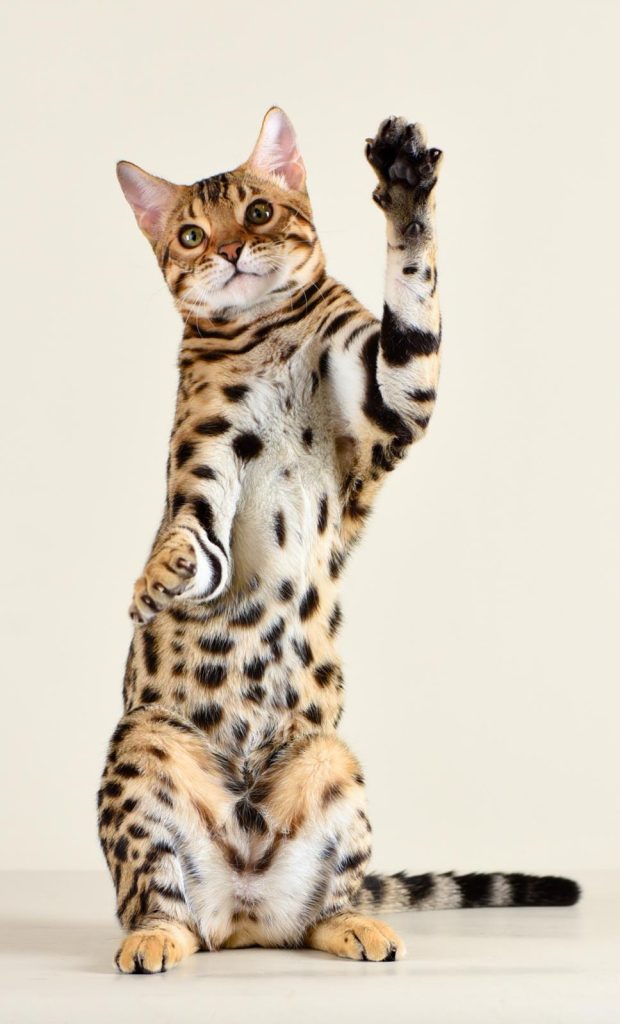
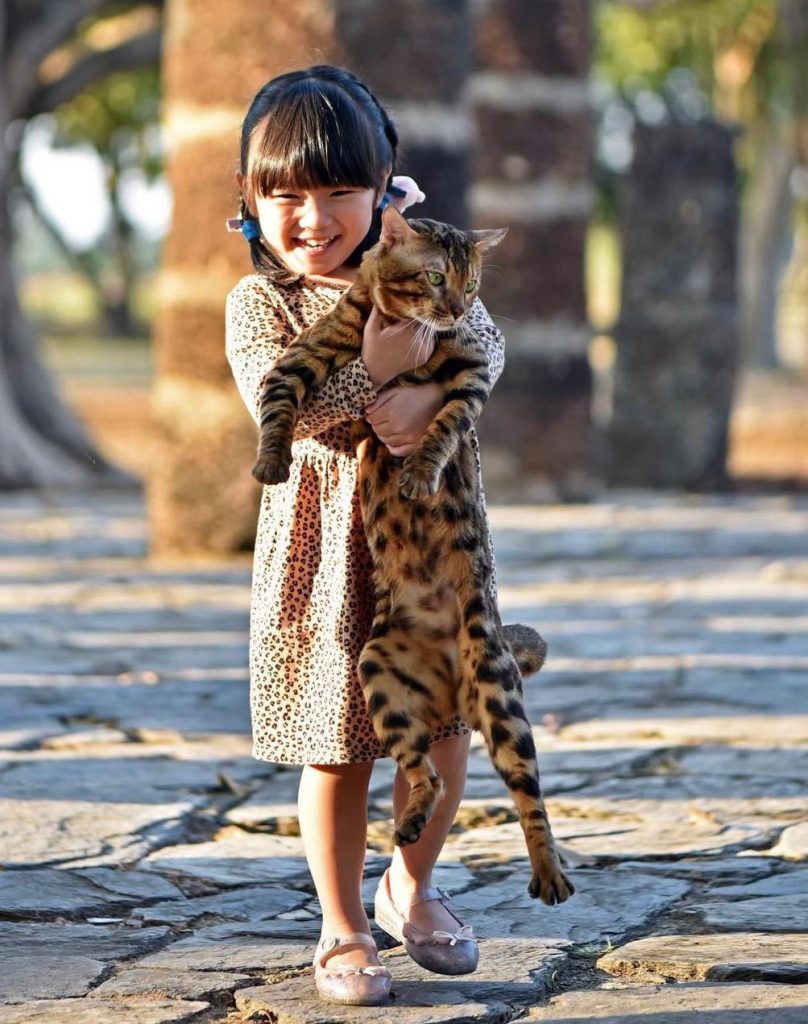
Years later, when we began breeding in Thailand, that early conversation resurfaced. In the beginning we were drawn to large clouded patterns and rich reddish tones. Our early cats did well at CFA shows, and we were proud of that recognition. Yet standing ringside, observing judges evaluate cats from different programs, we started asking more serious questions.
What actually gives a Bengal its wild impression? What separates a well-marked domestic cat from one that convincingly resembles a small forest predator?
As an Animal Biologist, I have always been interested in mechanisms rather than surface effects. The more we studied the standard, compared our cats to the Asian Leopard Cat, and observed how traits evolved with age, the more we understood that countershading was not simply aesthetic. It was part of the structural illusion of wildness.
What Countershading is (and what it is not)
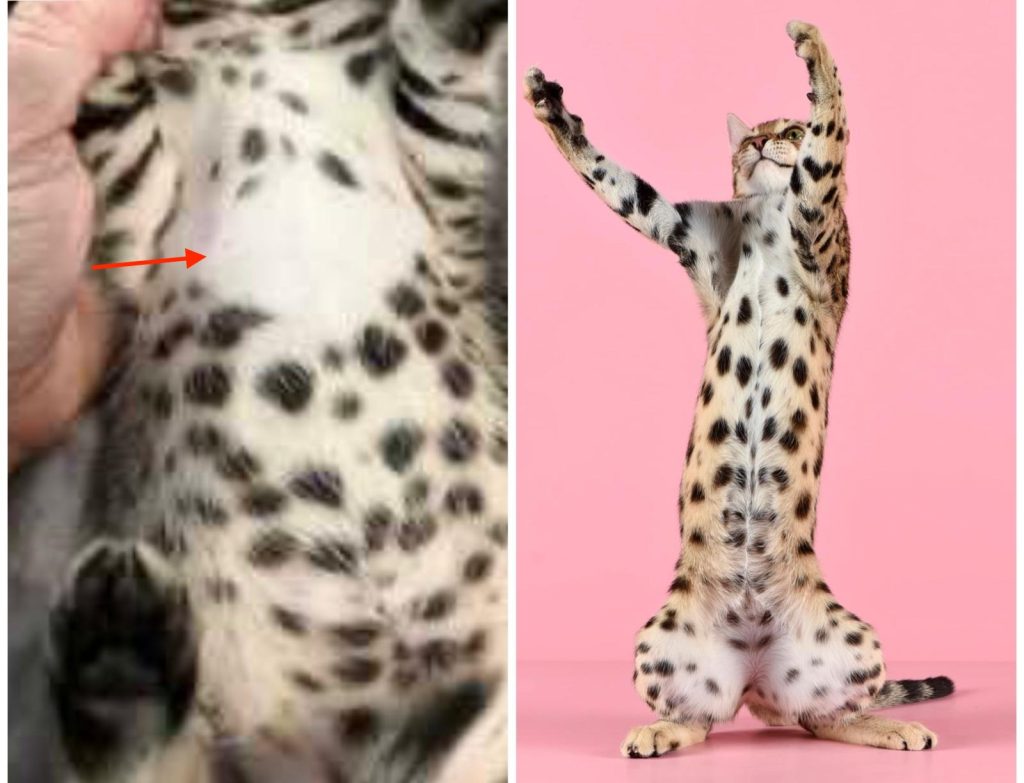
Countershading in a Bengal refers to the lighter coloration on the chin, chest, inner legs and belly while maintaining full pattern underneath. The critical point is that the belly remains spotted or rosetted. The pigment cells are present; what changes is the intensity or type of pigment being produced.
This distinction is important because countershading is often confused with white spotting. A locket or a white patch caused by spotting genes results from the absence of pigment cells in that area. Countershading does not remove pigment cells. It modifies how pigment is produced in those cells.
In wild felids such as the Asian Leopard Cat, leopard, jaguar, tiger, and most wild cat species, the underside is lighter but still fully marked. This is not accidental coloration. It serves a functional purpose. When light falls from above, the darker dorsal surface blends into shadow and vegetation. When the animal is viewed from below, the lighter underside blends into the brightness of the sky. This principle of camouflage, with a darker back and lighter belly, appears across many species. Fish provide a striking example. Many aquatic animals have dark blue or black backs and pale or silvery undersides, making them difficult to detect both from above and from below. Countershading in mammals follows the same visual logic.
All major Bengal standards describe lighter undersides. The challenge is not whether the trait exists in writing. The challenge is how rarely it appears with strength, width and contrast in a way that enhances the overall wild illusion of the Bengal breed.
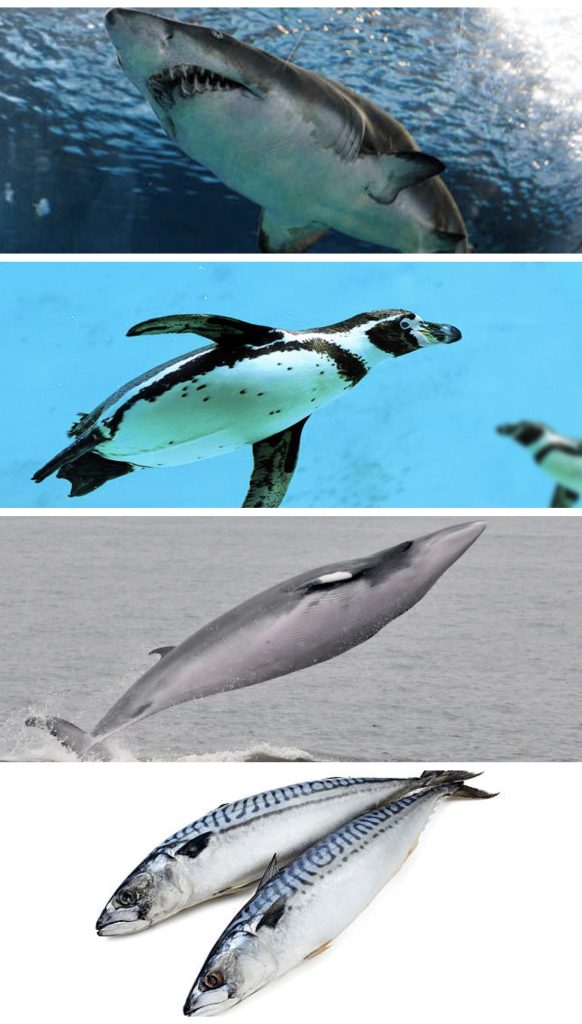
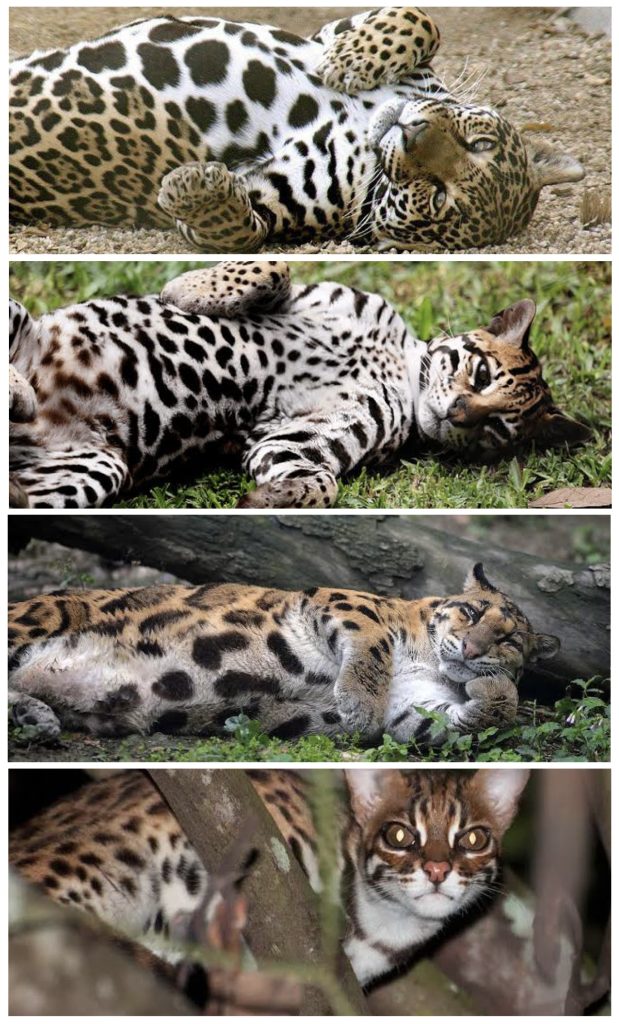
Different aquatic animals with countershading Bellies of a jaguar, an ocelot, a clouded leopard and an ALC
The Genetics of countershading
Understanding why countershading is difficult to stabilize requires a basic understanding of pigment biology.
Color in mammals is produced by specialized cells called melanocytes. These cells manufacture pigment and deposit it into the hair as it grows. There are two main types of pigment involved in coat color. Eumelanin produces black and dark brown coloration. Pheomelanin produces warmer tones such as yellow, orange and reddish brown.
Countershading does not occur because melanocytes are missing. If melanocytes fail to migrate or survive in a region, the result is true white spotting, and the pattern disappears (what we also call lockets). Genes such as KIT and MITF are known to influence this type of white spotting or lockets by affecting melanocyte development. In countershading, melanocytes remain present, the pattern is still visible. What changes is how much pigment is produced and which type dominates.
One of the key genes involved in pigment regulation is ASIP, which stands for Agouti Signaling Protein. ASIP influences whether melanocytes produce eumelanin or pheomelanin. Importantly, ASIP activity can vary across different regions of the body. In many mammals, including wild felids, differential ASIP expression between dorsal and ventral regions contributes to darker backs and lighter undersides.
Genomic studies in Bengals have identified ASIP involvement in coat variation and its interaction with Asian Leopard Cat ancestry. While ASIP alone does not explain countershading, it provides a biological framework for understanding how regional pigment differences may be inherited.
Another gene of interest is CORIN. CORIN influences the width of pigment banding within individual hairs and has been associated in other domestic breeds, such as golden British Shorthairs, with enhanced ventral lightening. In Bengals, there is currently no commercial DNA test that allows breeders to select specifically for countershading intensity. The trait appears to be polygenic, meaning multiple genes interact to influence its expression.
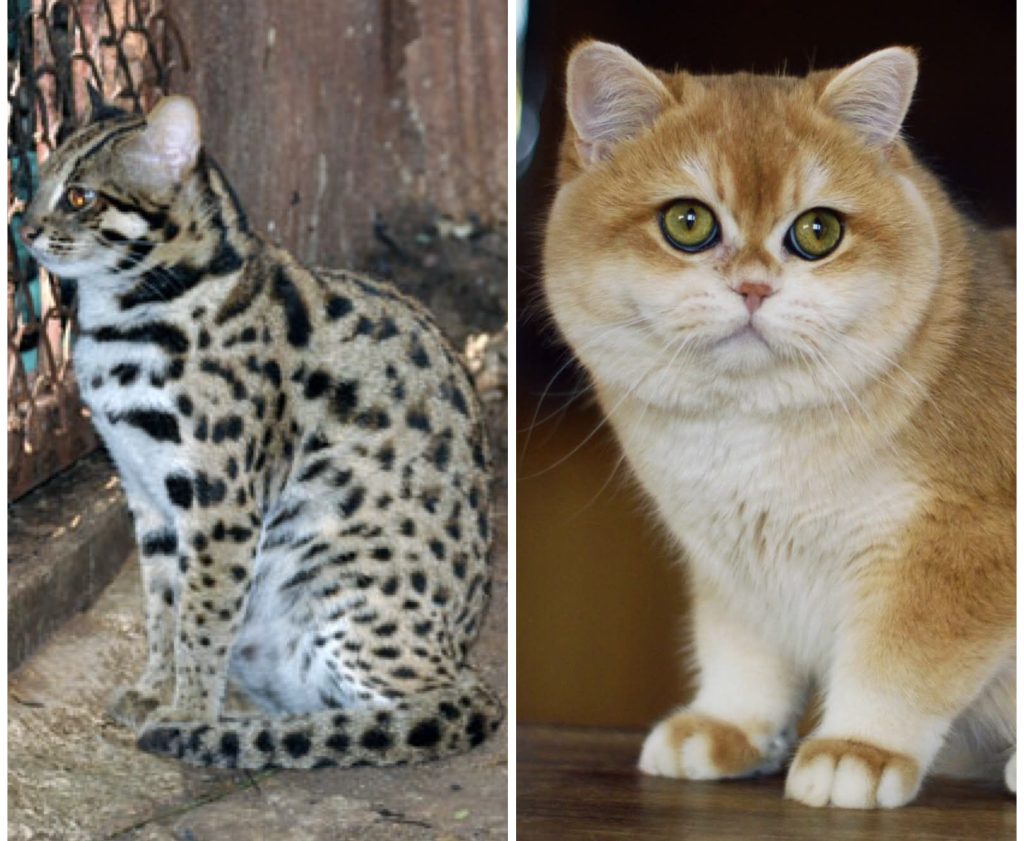
In practical breeding terms, this means countershading is influenced by regulatory mechanisms rather than a single mutation. It can strengthen or weaken depending on how pigment intensity and regional regulation combine in each individual.
At present, we do not have a genetic test that can reliably predict or measure the degree of countershading in a Bengal. Selection remains phenotypic and generational, based on observation, experience and long-term tracking.
2019: Guru Ulisse
In 2019 we brought Guru Ulisse from Italy into our program. This was the first time we intentionally introduced a cat because of his ventral lightening. As a kitten, Ulisse displayed a striking white underside. His mother, Guru Mandala, also showed strong countershading expression combined with black contrast.
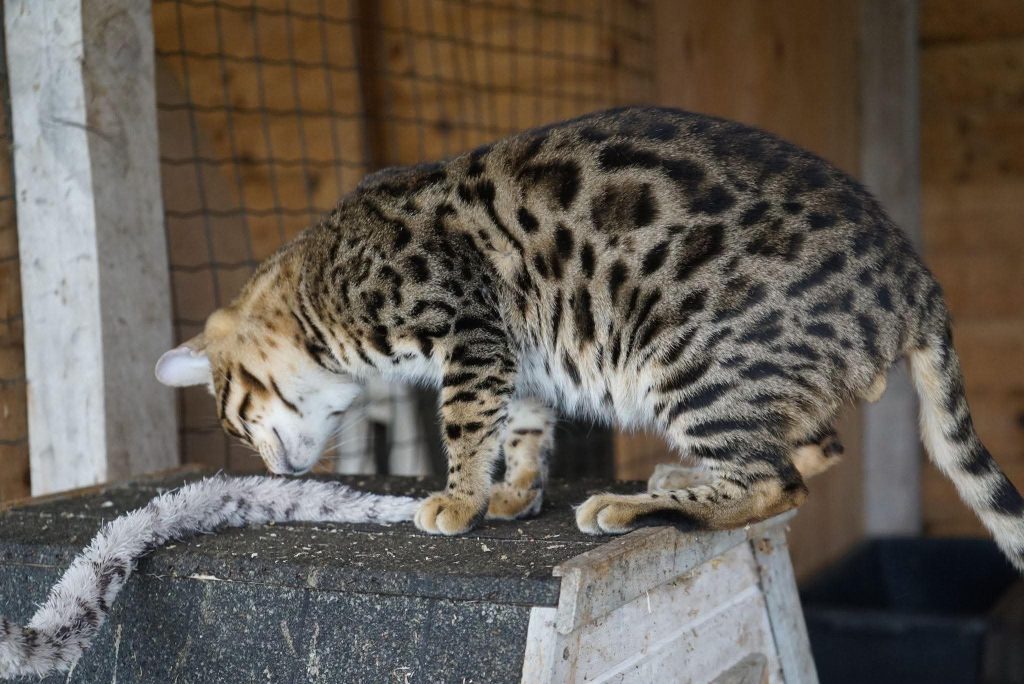
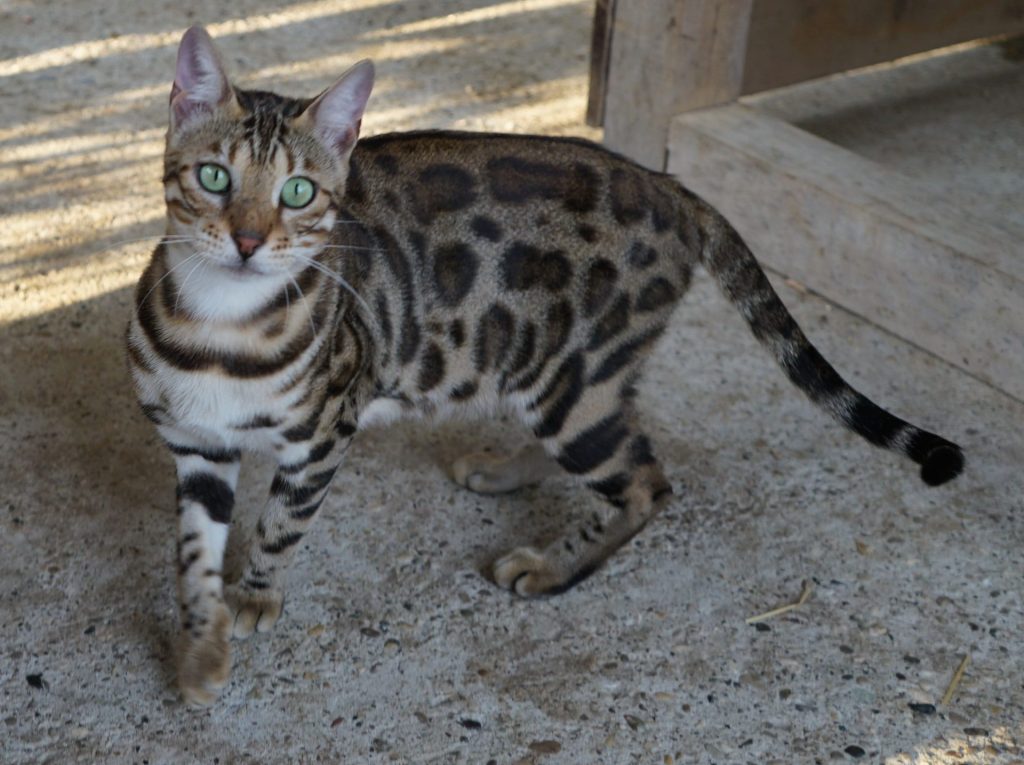
Ulisse was somewhat ticked and slightly muddy in body pattern, although his markings were black. As he matured, around two years of age, the crisp white softened. The transition between darker back and lighter underside remained visible, particularly in the inner legs, but the dramatic kitten-white tone was reduced.
This was our first direct lesson in maturity and pigment development. What appears extreme in a young kitten may moderate with age as eumelanin production stabilizes.
BangkokCats Farrah Moan and Forbidden Fantasy
Ulisse was mated to Amazongold-Faraon Show Russian Star, a very warm-toned female with minimal contrast and no countershading. From a litter of eight, two kittens showed ventral lightening.
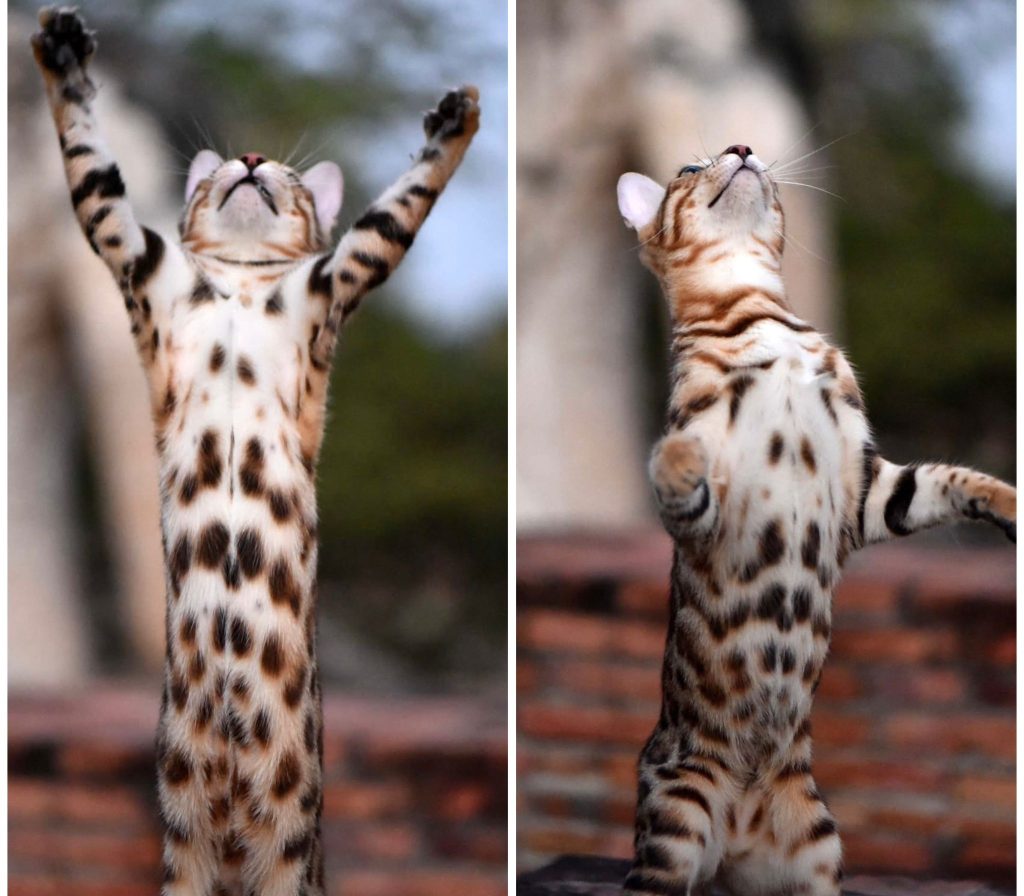
BangkokCats Farrah Moan had a very white underside, but her markings were dark brown rather than deep black, (and when she reached more than 2 years of age, markings faded more into brown-orangy). Because of her excellent eye shape, small and rounded ears, straight profile and overall expression, we kept her. She was an exception where countershading became more and more clear with age rather than cream out, seeing for the first time something uncommon as it usually happens the opposite.
Unfortunately she never produced offspring. In breeding programs this is not unusual. Fertility issues, developmental factors and other unforeseen circumstances often redirect carefully planned lines. Preservation breeding requires flexibility and patience.
BangkokCats Forbidden Fantasy, later Best Cat in Thailand, a CFA National Winner and International Breed Winner, showed lighter ventral areas but not extreme crisp white. His leg and tail markings were black, while body markings ranged from dark brown to black.
Fantasy produced some lighter-bellied kittens, but the combination of strong contrast and wide, crisp ventral lightening remained elusive.
During this stage we noticed a consistent pattern. Within litters, kittens with stronger ventral lightening often displayed softer contrast. Kittens with deeper black outlines frequently showed less white intensity underneath. Pigment strength and ventral regulation seemed to influence one another rather than acting independently.
The Snow Strategy: Papyrus
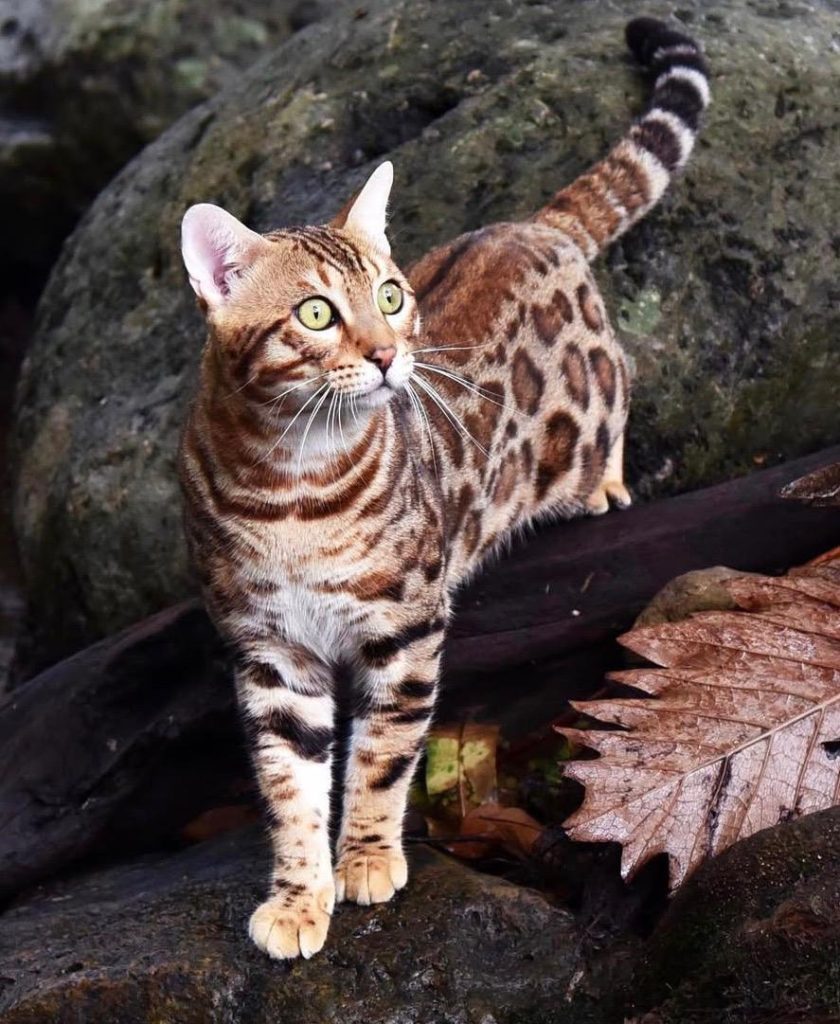
We then introduced Papyrus des Griffes de Feu, a snow lynx female from France. While her snow coloration masked direct evaluation of countershading, pedigree study revealed ancestors with ventral lightening or countershading.
From Papyrus and Fantasy came BangkokCats Raja, now an International Winner and Supreme Grand Champion in TICA in the United States. As a kitten, Raja showed strong contrast and visible countershading. As an adult, contrast softened slightly, but the structural countershading remained.
From the second litter came BangkokCats Alyssa Edwards, a National Winner, Best Kitten in Thailand under the King’s Cup, and Best Bengal Kitten at the CFA International Show in a highly competitive class.
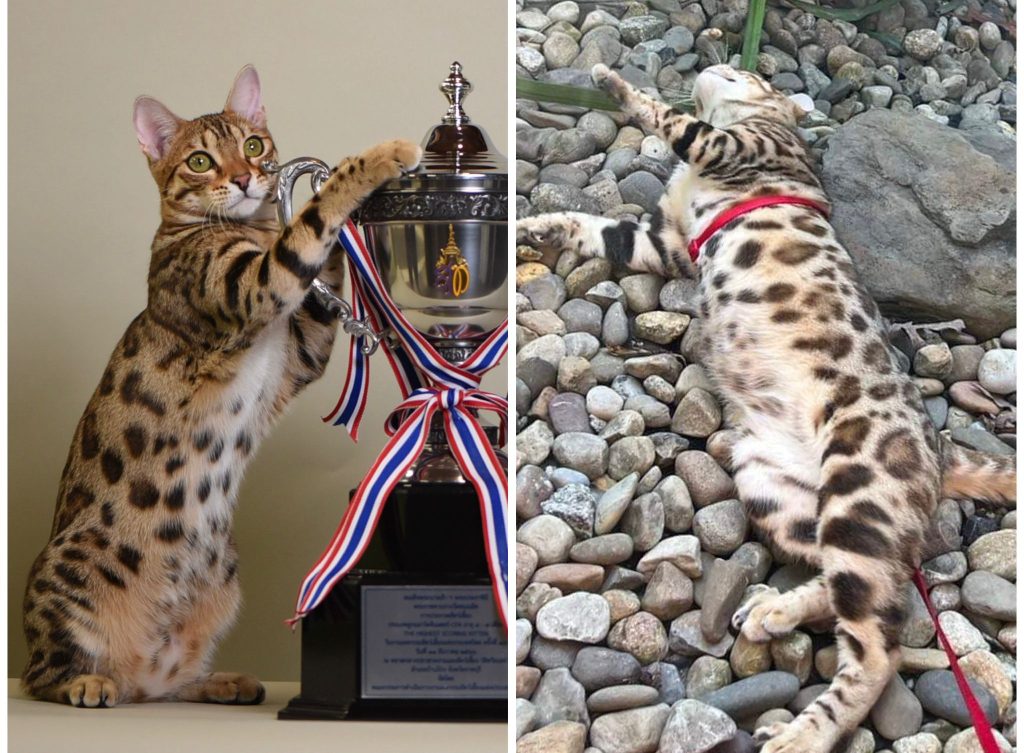
Alyssa presents a cooler brown tone compared to Raja, strong black contrast and ventral lightening concentrated in the chest and inner legs. The expression is not extremely wide, but it is clear and structured. She has produced countershaded kittens with good contrast, though variability persists.
Cream-out became a recurring observation. Many kittens appear whiter at eight weeks than they do at two years. As melanocytes reach full activity and pigment production stabilizes, ventral intensity may diminish if not genetically reinforced.
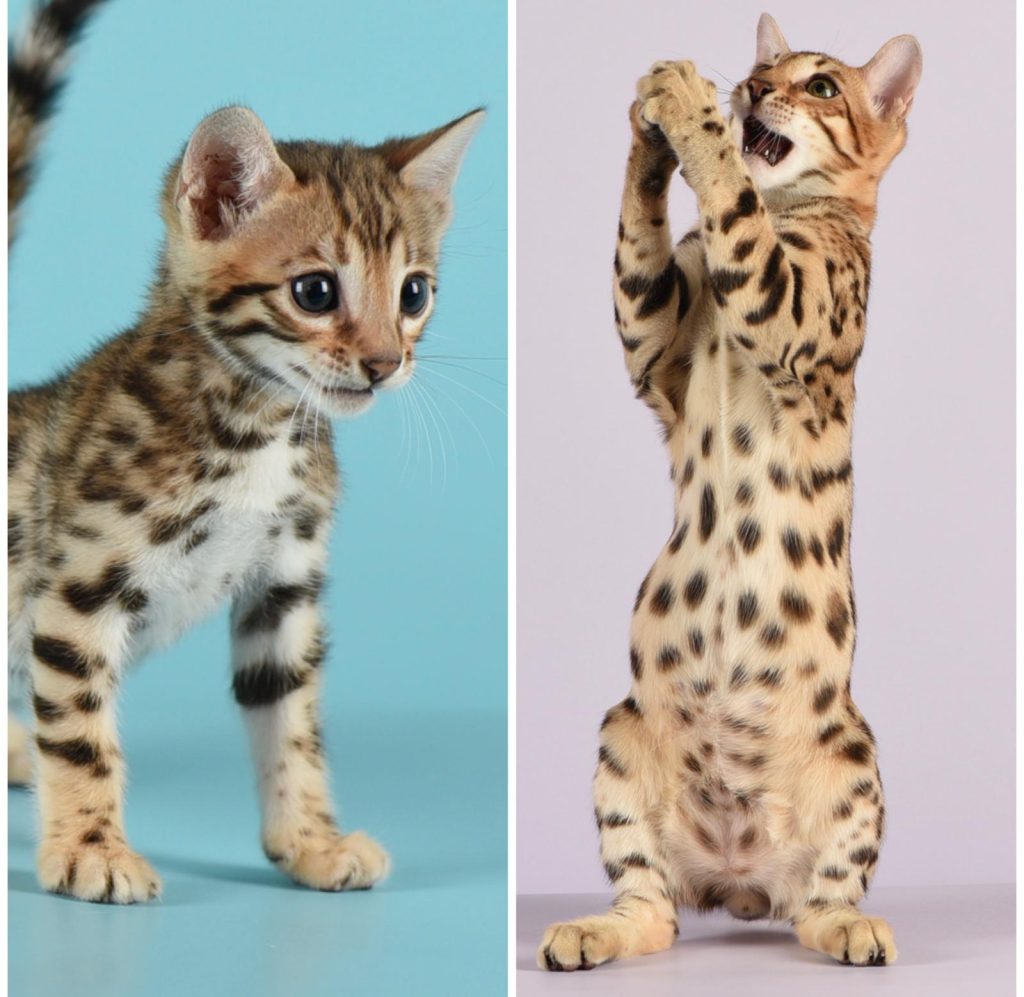
Sirius Black and rebuilding contrast while maintaining the countershading pattern
SilverCrown Sirius Black, a CFA National Winner and International Breed Winner who later earned the Distinguished Merit title, restored strong contrast to our program. As a kitten he displayed significant ventral lightening. As he matured, the white area narrowed but remained clearly expressed. From Sirius and BangkokCats Eureka we produced GC, DW BangkokCats Anetra, a whited female. BangkokCats Eureka has a cool brown and she doesn’t have countershading pattern, nevertheless she has other cats in her pedigree that do express this trait.
Anetra maintains balanced ventral lightening with correct contrast. The white is not extreme, but the structural transition remains intact.
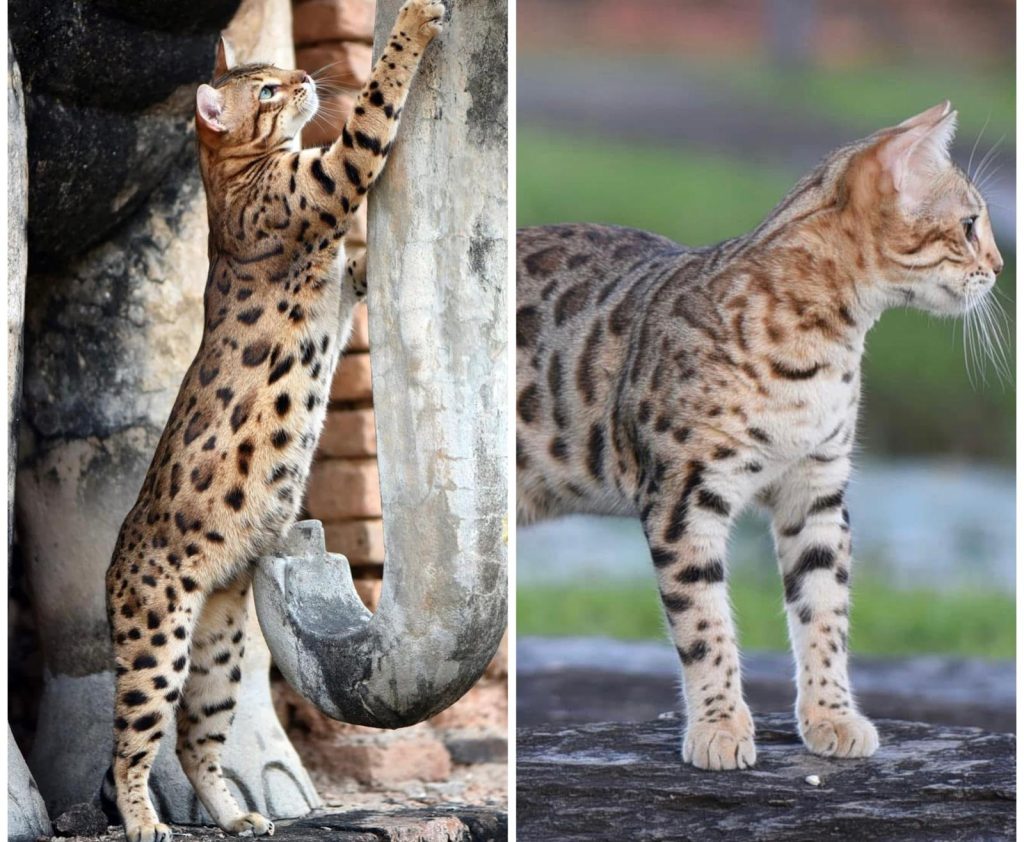
The Bella Paradox
With HuanyuCat Bella of BangkokCats, a silver female focused strongly on pattern and body, we encountered a revealing pattern. When Bella was mated to Fantasy, the kittens with countershading consistently showed weaker contrast. The kittens with strong black outlines lacked ventral lightening. This pattern repeated across three litters. The hypothesis here is that somehow we are asking the genes to have high contrast (black pigmentation in the markings) and at the same time not to be expressed in the belly, somehow contradictory, but at the same time reachable through selective pressure and the right genes.
When Bella was mated to GC BangkokCats Willow Pill, we obtained a brown female combining contrast and ventral lightening. That female became GC BangkokCats Trinity Taylor. From Trinity and GC, DW BangkokCats Peppermint came BangkokCats Plane Jane, currently developing promising balance between contrast and ventral expression.
This stage reinforced that countershading behaves as a complex, interacting system. It can skip generations, reappear unexpectedly and shift in intensity depending on how pigment regulators combine.
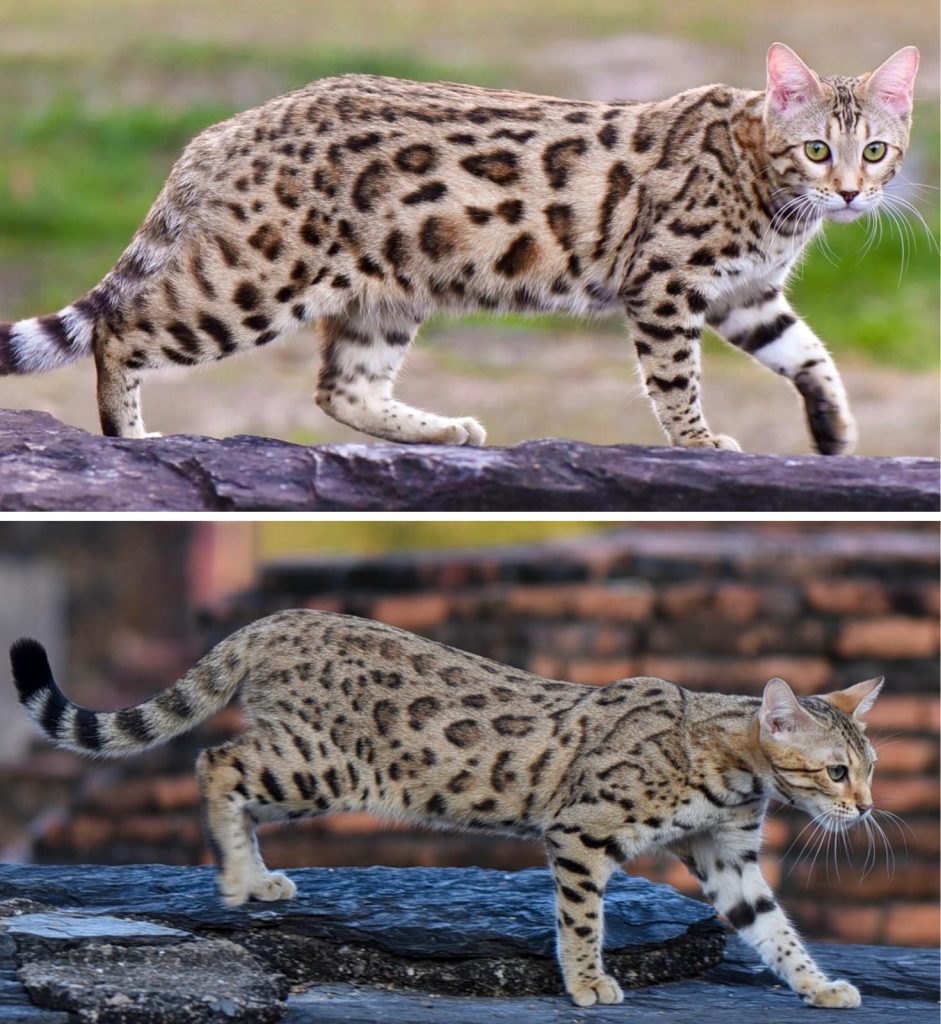
Eden, the most similar countershading to the ALC
The most recent addition to our program, QGC, RW Rosemoor Eden of BangkokCats, brought us closer to the balance we had envisioned.
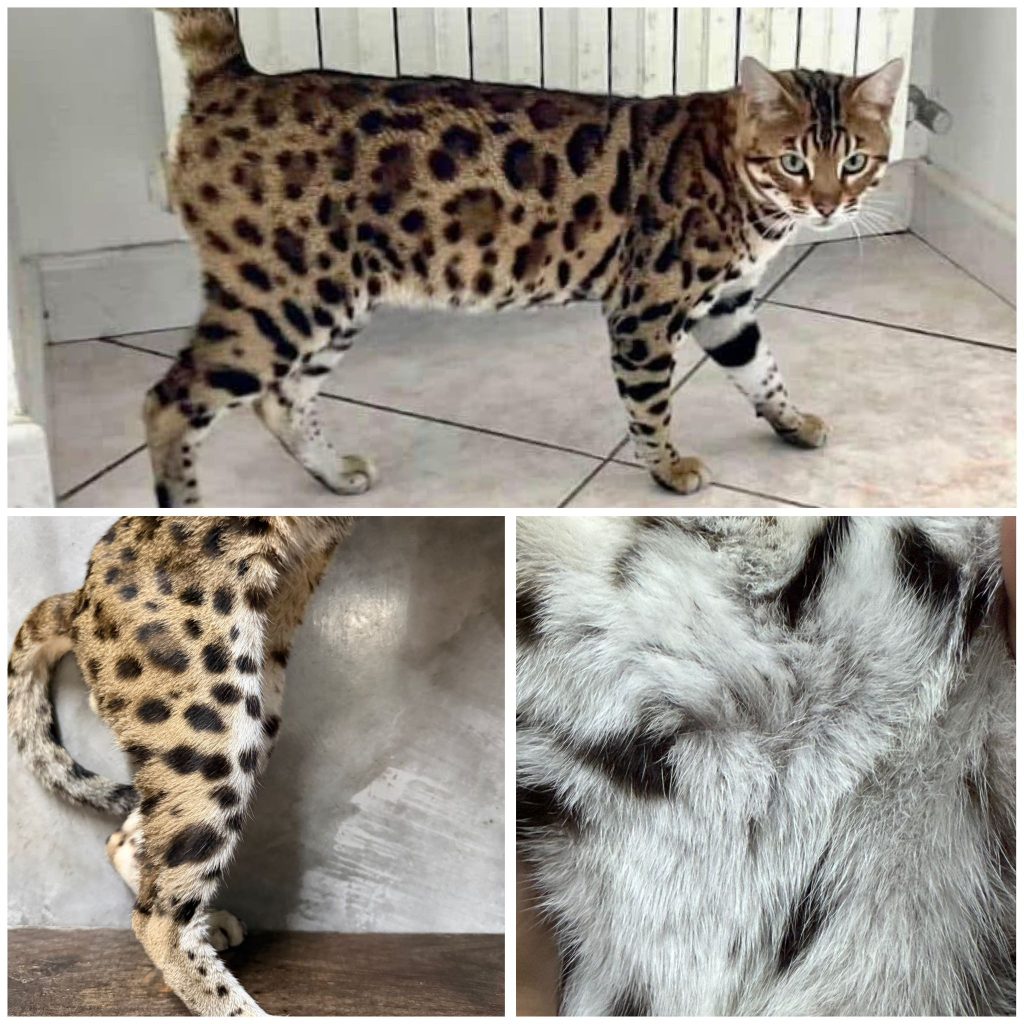
Eden combines deep ink-black markings with impressive crisp ventral lightening. He is out of two cats from Guru lines, that worked with the countershading expression for many years. Examination of the hair roots reveals subtle grey tones reminiscent of certain Asian Leopard Cats. To date, this grey-root characteristic has not yet appeared consistently in his offspring.
Eden consistently reinforces contrast in his offspring, while white intensity in bellies remains variable, which is consistent with the polygenic nature of the trait.
Preservation and Vision
We work exclusively with SBT Bengals (Bengals that are at least 4 generations away from the Asian Leopard Cat). Our aim is not to preserve wild genes for their own sake, but to preserve and refine wild expression.
The early Bengal standard was built around foundation cats closely resembling the Asian Leopard Cat. The ALC remains the biological blueprint. Within the framework of the standard there is room for interpretation, refinement and elevation.
Creating a Bengal that is even more beautiful than the Asian Leopard Cat does not imply exaggeration. It means achieving clarity, balance and intention. It means stacking contrast and countershading without sacrificing structure.
This direction has not developed in isolation. It has grown through conversations with fellow breeders across continents, through discussions at cat shows, through judge feedback and through years of experimentation. We have worked with many Bengals not mentioned here, both with and without countershading. Some lines could not continue, others lost essential traits, and some are also providing with new blood and increasing the genetic pool in our program. Selection is a long-term process that requires compromise.
Countershading remains a minority trait in our cattery. It is difficult to stabilize. It interacts with pigment intensity and can soften with maturity. Yet when the balance is correct, the effect is unmistakable. The Bengal reads as wild before anyone studies the rosettes.
References
OMIA: Coat colour, golden in Felis catus (domestic cat) — candidate gene CORIN and mapping notes.